Minnesota Ignition Interlock Installation
Getting your license back after a DWI in Minnesota involves more than just serving your suspension period. For most people, the path runs directly through an ignition interlock device, and the process of choosing a provider, scheduling installation, and staying compliant can feel overwhelming when you're already dealing with court requirements, insurance filings, and the stress of limited driving privileges. Minnesota's interlock program has seen meaningful updates heading into 2026, including expanded lookback periods and new camera requirements that affect which devices qualify. This guide breaks down exactly what you need to know about finding approved interlock providers and installation locations across the state, so you can get back on the road without unnecessary delays or surprises.
Navigating the Minnesota Ignition Interlock Program in 2026
Minnesota's ignition interlock program is managed by the Department of Public Safety's Driver and Vehicle Services (DVS) division. The program applies to drivers who've had their licenses canceled or revoked due to impaired driving offenses, and participation is mandatory for most people seeking to regain any driving privileges before their full revocation period ends.
One major change affecting 2026 participants: effective August 1, 2025, Minnesota's lookback period for prior impaired driving incidents expanded from 10 years to 15 years. That means offenses from further back in your history now count toward determining your program length and license plate impoundment requirements. If you had a DWI 12 years ago and assumed it wouldn't factor in, think again.
DVS Eligibility Requirements and the Participation Agreement
Before you can get an interlock device installed, you need to apply through DVS and sign a participation agreement. Eligibility depends on the nature of your offense and where you are in your revocation timeline. First-time offenders with a BAC under 0.16 may qualify for the program immediately, while repeat offenders or those with aggravating factors face longer waiting periods.
The participation agreement isn't just a formality. It spells out your obligations: keeping the device calibrated on schedule, not attempting to tamper with or bypass the unit, and reporting any vehicle changes to DVS. Violating any term can reset your clock, adding months to your program enrollment. You'll also need to carry SR-22 insurance for the duration of your interlock participation. SR22 Direct can get that filing done within minutes, often same-day, so it doesn't hold up your interlock timeline.
Understanding Limited Licenses vs. Full Reinstatements
A limited license through the interlock program lets you drive any vehicle equipped with a certified device. This isn't the same as full reinstatement. You're restricted to interlock-equipped vehicles only, and driving any vehicle without a device is a criminal offense that can result in new charges.
Full reinstatement comes after you've completed the entire program, passed all compliance checks, and maintained your SR-22 filing without lapses. The timeline varies: first-time offenders might be looking at one year on the interlock, while third-time offenders could face three to six years depending on their case specifics.
Approved Ignition Interlock Vendors in Minnesota
Minnesota maintains an official list of state-certified interlock vendors. You can't just pick any breathalyzer company you find online; the device and provider must be approved by DVS. As of 2026, there are several certified vendors operating in the state.
Comparing Top-Rated State-Certified Providers
The main providers serving Minnesota include Intoxalock, Smart Start, LifeSafer, and Draeger. Each offers slightly different pricing structures, customer service experiences, and location coverage across the state.
| Provider | Installation Fee | Monthly Lease | Calibration Interval | Metro Locations | Greater MN Locations |
|---|---|---|---|---|---|
| Intoxalock | $0-$50 | $70-$90 | 30 days | 8+ | 12+ |
| Smart Start | $0-$75 | $75-$100 | 30 days | 6+ | 8+ |
| LifeSafer | $0-$50 | $70-$95 | 60 days | 5+ | 6+ |
| Draeger | $25-$75 | $80-$100 | 30 days | 4+ | 5+ |
Pricing shifts frequently, so call for current quotes. The real differentiator between providers often comes down to how many service locations they have near you and how easy it is to schedule calibration appointments. If you live in rural Minnesota, that factor alone might make your decision.
Device Technology and 2026 Camera Requirements
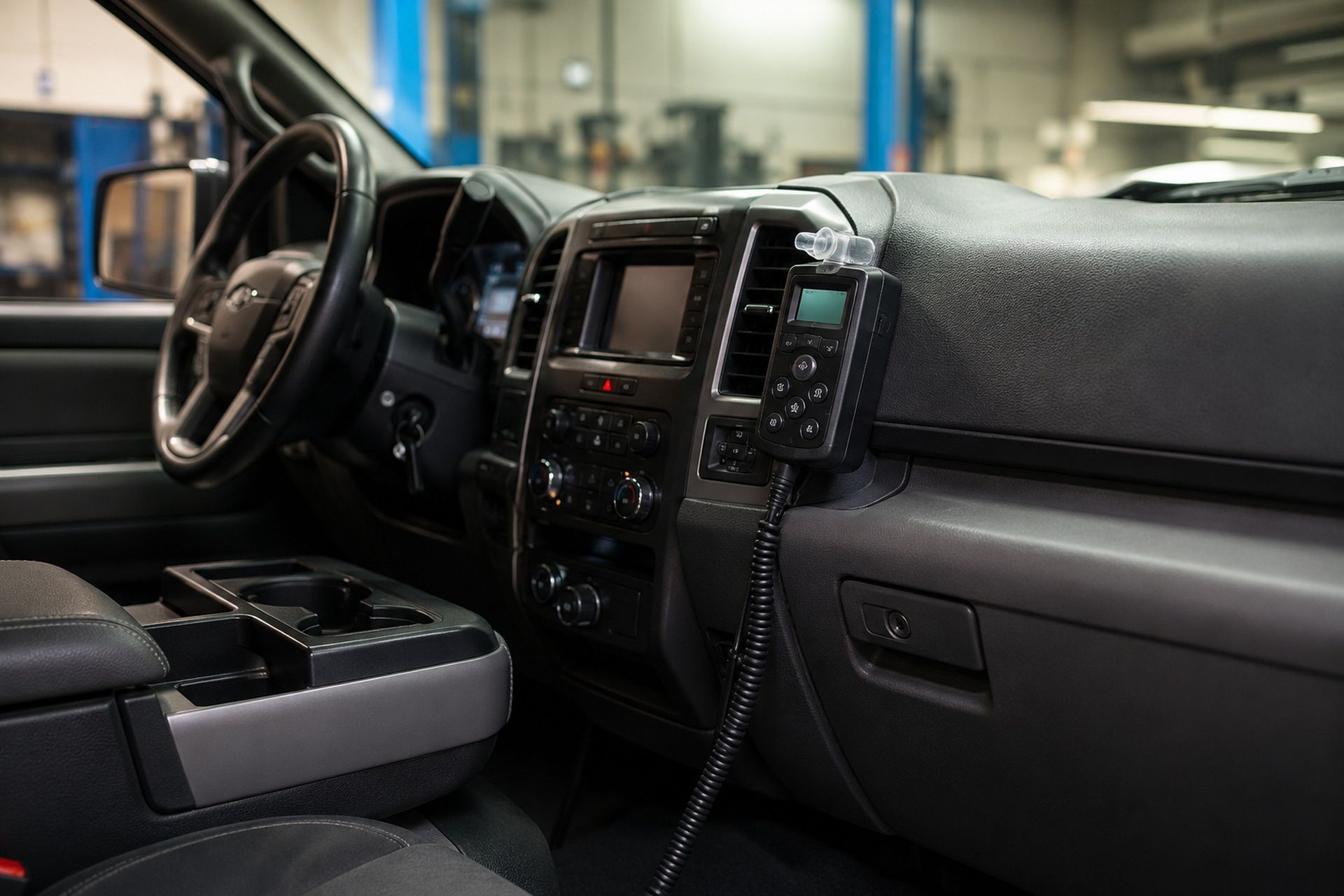
Minnesota now requires all interlock devices to include a camera that photographs the person providing the breath sample. This prevents someone else from blowing into the device on your behalf. The photos are reviewed during calibration appointments and can be audited by DVS at any time.
All four major providers have updated their devices to meet this requirement. The cameras activate automatically during each test, including rolling retests while driving. If the camera captures someone other than the enrolled participant providing a sample, that's an automatic violation.

By: Evan Marcotte
SR-22 Insurance Specialist
INDEX
Navigating the Minnesota Ignition Interlock Program in 2026
Approved Ignition Interlock Vendors in Minnesota
Finding Installation Locations Across the North Star State
Costs and Financial Assistance for Minnesota Residents
The Installation Process and Maintaining Compliance
SR22 Direct connects drivers with licensed insurance agents who file SR22 and FR44 certificates for those needing proof of financial responsibility — available in all 50 states.
We help drivers across the country — from Florida, Virginia, Texas, and California, coast to coast — get matched with licensed insurance professionals who specialize in DUIs, license suspensions, and high-risk violations. SR22 Direct is not an insurance agency. We partner with a nationwide network of licensed agents and top-rated carriers so every driver can connect with a qualified professional for compliant, affordable, and often same-day SR22 or FR44 filing wherever they need it.
Finding Installation Locations Across the North Star State
Scheduling your installation appointment quickly matters because you can't drive legally on your limited license until the device is in your vehicle and DVS has been notified. Most providers can get you installed within a few business days of your initial call.
Service Hubs in Minneapolis, St. Paul, and the Twin Cities Metro
The Twin Cities metro area has the highest concentration of installation locations, which makes sense given the population density. Most providers operate multiple shops across Hennepin, Ramsey, Dakota, and Anoka counties. Intoxalock and Smart Start tend to have the broadest metro coverage, with locations in Brooklyn Park, Burnsville, Maplewood, and Woodbury among others.
Appointment availability is generally good in the metro, with many locations offering same-week installation. That said, January and summer months tend to be busier, so don't wait until the last minute if your court date is approaching. A typical installation takes 60 to 90 minutes.
Greater Minnesota Coverage: Duluth, Rochester, and St. Cloud
Outside the metro, your options narrow but don't disappear. Duluth typically has two to three provider locations, Rochester has similar coverage, and St. Cloud usually has at least one or two shops. Smaller cities like Mankato, Moorhead, and Brainerd may have a single location or rely on mobile installation technicians who travel to your area.
If you're in a remote part of the state, Intoxalock tends to have the widest rural network through partnerships with auto shops that serve as certified installation points. Call ahead and confirm availability, especially during winter months when scheduling can be unpredictable.
New Title
Costs and Financial Assistance for Minnesota Residents
The financial burden of an interlock device adds up. Between installation, monthly leasing, calibration visits, and removal fees, you're looking at a meaningful expense over the life of your program.
Breakdown of Installation, Monthly Lease, and Calibration Fees
A realistic budget for a one-year interlock program looks something like this: $0 to $75 for installation, $70 to $100 per month for the device lease (which usually includes calibration), and $50 to $100 for removal at the end. Over 12 months, that's roughly $900 to $1,375 total. Multi-year programs obviously multiply those monthly costs.
Calibration appointments happen every 30 to 60 days depending on your provider. Missing a calibration is a program violation, so factor in the time commitment as well. Some providers charge extra for missed appointments or rescheduling with less than 24 hours notice.
Applying for Indigent Programs and Reduced Fee Waivers
Minnesota law requires interlock vendors to offer reduced fees for participants who demonstrate financial hardship. If your income falls below certain thresholds, you may qualify for a discount of 10 to 50 percent on monthly lease fees. Each vendor handles the application process differently, but you'll generally need to provide proof of income such as tax returns, pay stubs, or documentation of public assistance enrollment.
Don't skip this step out of embarrassment. These programs exist specifically because the state recognizes that making the interlock financially impossible defeats the purpose of getting people back to legal driving. Ask your provider directly about their indigent program during your first call.
The Installation Process and Maintaining Compliance
Knowing what to expect removes a lot of the anxiety around getting your device installed and keeping it running properly.
What to Expect During Your Initial Appointment
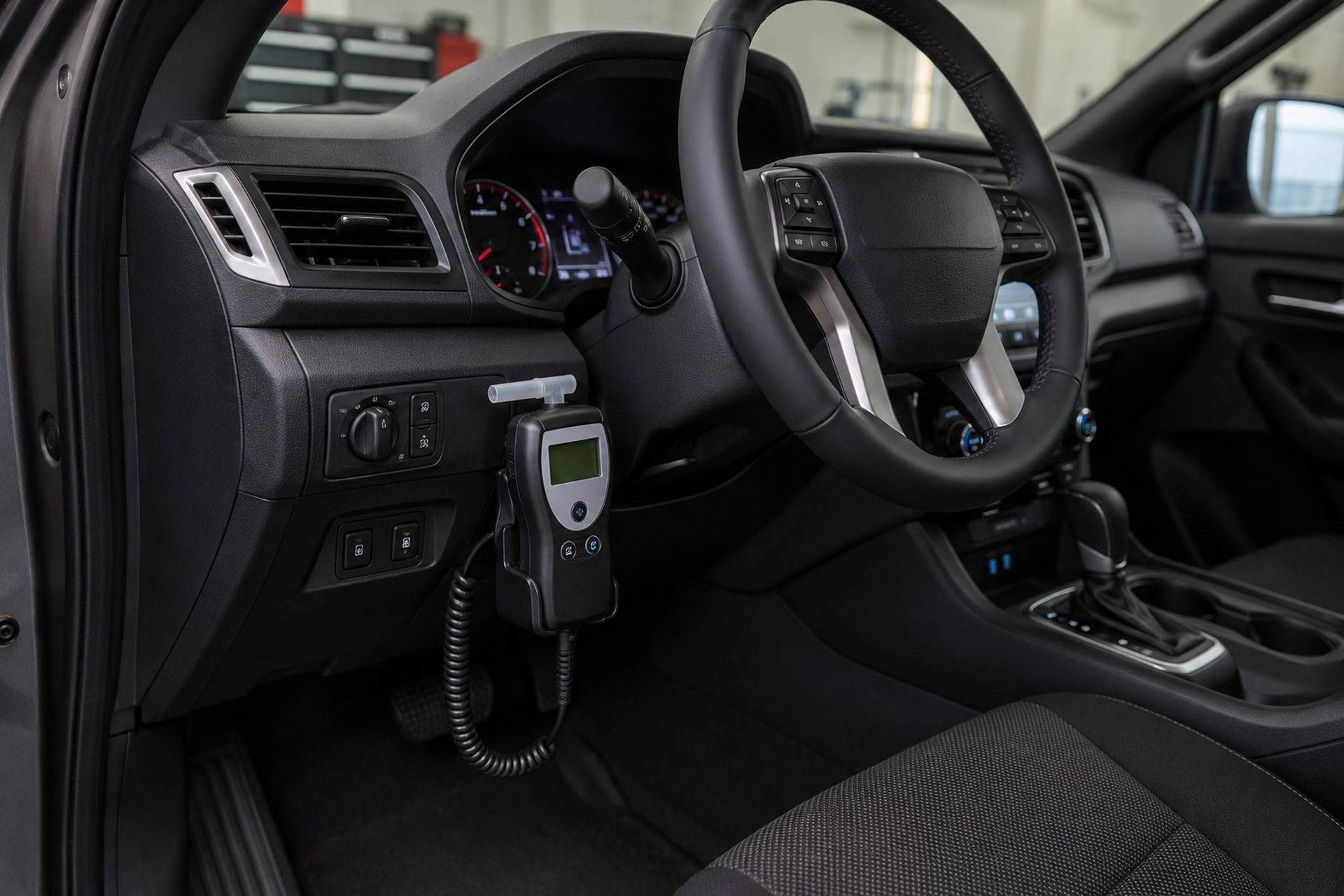
The interlock doesn't just test you when you start the car. Rolling re-tests happen at random intervals while you're driving, typically every 15 to 45 minutes. The device signals you with a tone, and you have a few minutes to provide a breath sample. If you miss the window or fail the test, the device logs a violation and may trigger your horn and lights to flash until you pull over and turn off the engine.
Every data point gets recorded: start-up tests, rolling re-tests, failed samples, missed tests, and any attempts to tamper with the device. This data is uploaded during calibration visits and sent directly to the DHSMV. Think of the device as a constant witness. There's no way to game it, and trying to do so only creates more problems.
Bring your participation agreement from DVS, a valid photo ID, and your vehicle. The technician will wire the device into your vehicle's ignition system, calibrate the breath sensor, and walk you through how to use it. You'll practice giving breath samples, learn about rolling retests, and receive instructions on what to do if the device malfunctions.
The device will require a breath sample before your engine starts. If your BAC registers above the preset limit (typically 0.02), the vehicle won't start. Rolling retests happen at random intervals while driving, and you'll have a few minutes to provide a sample safely. The device logs every test result, and that data gets downloaded during calibration visits.
Avoiding Program Violations and Extension Penalties
The most common violations include missed calibration appointments, failed breath tests, and camera discrepancies. Each violation gets reported to DVS and can extend your program by months. Three or more violations in a monitoring period can result in program revocation entirely, sending you back to square one.
One mistake people make: using mouthwash or eating certain foods right before a test. Alcohol-based mouthwash can trigger a fail. Wait at least 15 minutes after eating or drinking anything before providing a sample. If you get an unexpected fail, wait a few minutes and retest. The device logs everything, and a single anomaly followed by a clean retest usually won't trigger a violation report.
Steps to Successful Device Removal and License Recovery
The finish line is real, and getting there requires consistent compliance in the final months of your program. DVS will review your complete interlock data before authorizing device removal. Any violations in your last monitoring period can delay the process.
Once DVS confirms you've completed the program, you'll schedule a removal appointment with your provider. After removal, you still need to maintain your SR-22 insurance filing for the duration required by the state, which often extends beyond the interlock period itself. SR22 Direct handles these ongoing filings and can help you find the lowest rates so you're not overpaying during that final stretch. Their agents understand the Minnesota reinstatement timeline and can answer questions about when your SR-22 requirement actually ends.
Keep copies of your program completion documentation. You'll need proof of successful completion for DVS, and having those records accessible makes the final reinstatement process smoother.
Frequently Asked Questions
Can I switch interlock providers mid-program? Yes, but you'll need to coordinate with DVS and may face additional installation and removal fees. The new provider must also be state-certified.
What happens if my interlock device malfunctions? Contact your provider immediately and document the issue. Most providers offer emergency service lines. Do not attempt to drive without a functioning device.
Do I need an interlock on every vehicle I own? Yes. Minnesota requires the device on every vehicle registered in your name. Driving any unequipped vehicle is a criminal offense.
How long does Minnesota require SR-22 insurance after a DWI? Typically three years from your reinstatement date, though the exact duration depends on your offense history. Your insurer can confirm your specific end date.
Will my interlock data be shared with my employer? DVS treats interlock records as private, but court orders or specific employer policies (especially for commercial drivers) may require disclosure.
About the Author:
Evan Marcotte
As the founder of SR22 Direct, I'm passionate about helping high-risk drivers get back on the road quickly, affordably, and without the runaround. My goal is to make SR22 and FR44 filings simple to understand and stress-free to complete — from your first quote to your certificate in hand, same day.
SR22 Insurance — Nationwide
SR22 & Every Filing Type — All 48 States
SR22 for all 48 states. Non-owner options for drivers without a vehicle.
FR44 for Florida and Virginia DUI filings. We cover every scenario.
SR22 · All 48 States
SR22 Auto Insurance
Affordable SR22 auto policies with same-day electronic filings. We shop all major carriers — Dairyland, Progressive, Bristol West, National General, and more.
SR22 · No Vehicle
Non-Owner SR22
Don't own a car but need to reinstate your license? Non-owner SR22 provides the liability coverage required to file — at lower rates than a standard auto policy.
High Risk Nationwide
DUI Insurance
Following a DUI conviction, most states require an SR22 alongside a high-risk auto policy. We specialize in this exact situation and find you the lowest rate available.
SR22 · LICENSE REINSTATEMENT
Suspended License Insurance
Need insurance to reinstate a suspended license? We handle the SR22 filing your state requires so you can get your driving privileges restored as fast as possible.
FR44 · FL & VA ONLY
FR44 Insurance
Florida and Virginia require FR44 instead of SR22 after a DUI. FR44 carries higher liability limits — we specialize in both states and file your certificate the same day.
FR44 · NO VEHICLE
Non-Owner FR44 Insurance
Required in Florida and Virginia if you've had a DUI but don't own a vehicle. An FR44 non-owner policy meets state filing requirements at a lower cost than standard FR44 coverage.
Why SR22 Direct
10+ Years. Licensed in All 48 States.
SR22 Experts.
Immediate Processing
We know time is critical. Our streamlined process gets your SR22 or FR44 filed the same day — minimizing any delay in getting back on the road.
Lowest Rates Guaranteed
We shop all major high-risk carriers — Dairyland, Progressive, Bristol West, National General — so you get the lowest rate available in your state.
SR22 & FR44 Specialists
Most insurers see SR22 and FR44 as a headache. We specialize in it. Our agents know every state's requirements inside-out, including FR44's higher limits.
Truly Nationwide
Licensed agents in all 48 SR22 states, plus FR44 specialists in Florida and Virginia. Wherever you are, we have the right agent for your filing.
WHAT OUR CLIENTS SAY
Fast Filings. Happy Drivers. 5-Star Service.
Our clients came to us stressed and stuck. They left filed, covered, and back behind the wheel. Read their stories below.
Nationwide Coverage
SR22 Insurance by State
Select your state for SR22 requirements, cost ranges, and filing timelines. In Florida and Virginia, FR44 is required for DUI convictions.
Florida
Texas
California
Ohio
Colorado
Michigan
Indiana
Tennessee
Alabama
Arkansas
Louisiana
Kentucky
Nebraska
Mississippi
Wisconsin
Minnesota
W. Virginia
Maryland
Connecticut
New Jersey
New Hampshire
Vermont
Rhode Island
Massachusetts
Illinois
Georgia
Virginia
Arizona
Missouri
N. Carolina
Washington
Nevada
S. Carolina
Utah
Iowa
Kansas
Oregon
Idaho
Montana
Wyoming
New Mexico
Alaska
Hawaii
Maine
N. Dakota
S. Dakota
Oklahoma
Delaware
faq
Frequently Asked Questions
Everything you need to know about SR22 and FR44 filings, costs, state requirements, and getting your license reinstated.
What is an SR22 and do I need one?
An SR22 is not insurance itself — it's a certificate of financial responsibility that your insurer files with your state DMV on your behalf. It proves you carry the minimum required liability coverage. Courts and states require it after serious driving violations like DUI, driving without insurance, reckless driving, or license suspension.
How fast can I get my SR22 filed?
Most of our clients are filed within 10 minutes of their first call. Once you approve a policy, your agent submits the SR22 electronically to your state DMV — often the same day. You'll receive your certificate by email immediately.
How much does SR22 insurance cost?
SR22 auto insurance starts around $49/month for vehicle owners and $38/month for non-owner policies, depending on your state and driving record. We shop all major high-risk carriers — Dairyland, Progressive, Bristol West, and National General — to find you the lowest available rate.
How long do I need to carry SR22 insurance?
Most states require SR22 coverage for 2–3 years. If your policy lapses at any point, the filing clock typically resets and your license can be suspended again. We monitor your policy and handle every renewal automatically so you never have to worry about a lapse.
Can I get SR22 insurance if I don't own a car?
Yes. A non-owner SR22 policy provides the liability coverage needed to reinstate your license without owning a vehicle. It's typically cheaper than a standard auto policy and works exactly the same way for your DMV filing requirement.
Do you cover all 48 SR22 states?
Yes — we have licensed agents in all 48 states that require SR22 filings. A small number of states (including New York and Pennsylvania) use different filing systems. Call us and we'll tell you exactly what's required in your state and get you set up the same day.
What's the difference between SR22 and FR44?
FR44 is required exclusively in Florida and Virginia after a DUI conviction. It works like an SR22 but mandates significantly higher liability limits — 100/300/50 in Florida vs. the standard 10/20/10 minimum. If you're in Florida or Virginia with a DUI, you need FR44, not SR22. We handle both.